Living Today Knowing That One Day We Will Miss It
Nostalgia is not only about longing for the past. It is also about recognising that everything we are living today will one day become a memory — and perhaps something we will long for.
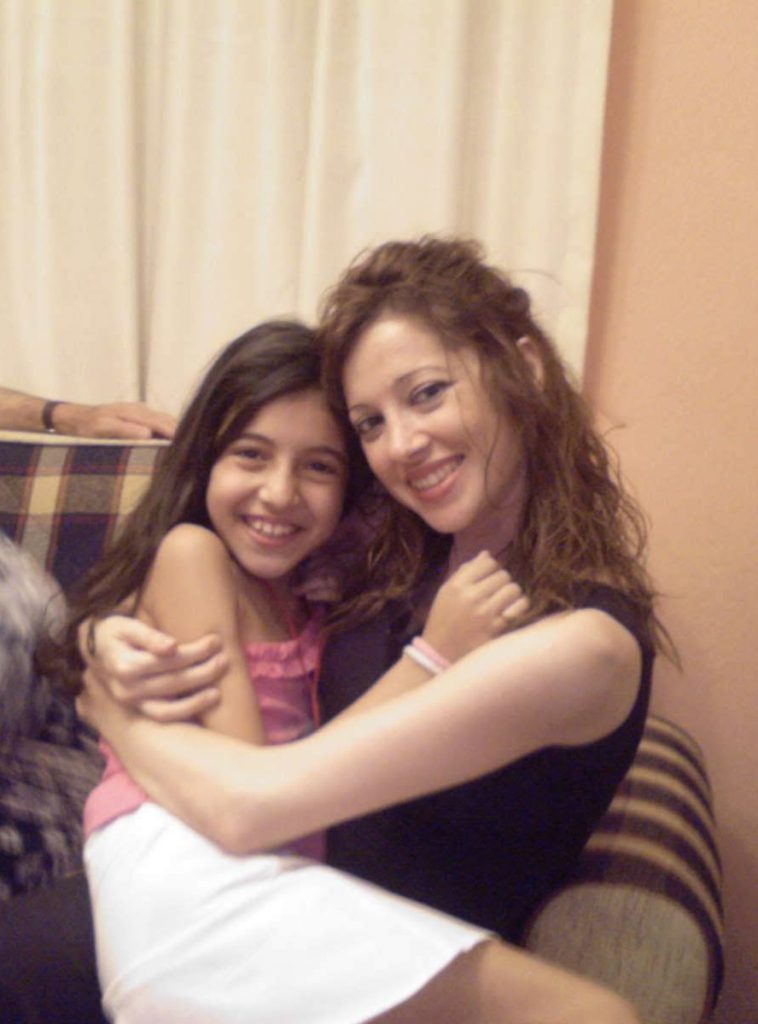
When we leave a place, what do we really leave behind?
A home, a city, a country, people we know, the language we speak, our routines, familiar streets, ordinary parts of everyday life… At first, it seems that these are the things we leave behind. But our relationship with the past is much more complicated than that. Leaving a place physically does not mean that everything we experienced there stays behind with it. The past sometimes comes with us without us even noticing. It can appear in a memory, in an old photograph, in an object we have kept for years, in a word, a scent, or a song we suddenly hear. This is why defining nostalgia simply as “missing the past” feels incomplete. There is something much deeper happening in the way we remember, what we choose to preserve, and what we continue to carry. When we leave a country, the life we lived there remains physically behind. The people, streets, homes, relationships and routines cannot all come with us. Yet none of what we lived disappears completely. Some of it settles into our memory, and wherever we go, we continue to carry pieces of it within us. Perhaps the real question is not only what happened in the past, but how we remember the past today — and how we will remember what we are living today in the future. Because the life we are living now will one day become the past.
And perhaps knowing that changes the way we look at today.
Why does the past stay with us?
We do not simply remember the past. As the years pass, we keep looking at it again. Something that once seemed extremely important can take on a different meaning. Something that frightened us as children may make us smile years later. A street that once felt completely ordinary can become deeply meaningful in our memory. And sometimes we only understand the importance of a person in our lives long after that period has passed. Memory is not a perfect archive. What we remember is not only an answer to the question, “What happened?” It is also an answer to another question: “How do I remember what happened now?” Two people can live through the same experience and remember it completely differently. Our memories are shaped not only by what happened, but also by who we have become since then. Who we are today changes the way we look at who we were yesterday. Perhaps whenever we look back at the past, we are also seeing a little of the person we are today. Why do old objects matter so much? One of the most visible ways we carry our past with us is through objects. A photograph, an old letter, a childhood toy, something that once belonged to someone we loved, a small object brought from another country… These things may have very little material value. But what they mean to us can be immeasurable.
Because at some point, certain objects stop being just objects. They become small doorways into another person, another time, another home, another relationship, or another version of our lives. I keep one or two belongings of people who were special to me and are no longer here. When I look at them, I do not simply see the object. I remember the person, a beautiful moment we shared, and the feeling that moment left behind.Sometimes the value of an object is not that it can bring the past back.
It is that it allows us to still feel connected to it. Perhaps this is why we find certain things so difficult to throw away. We are not necessarily afraid of losing the object itself. We may be afraid of losing the memory attached to it. This becomes even more significant when we talk about migration.
When someone leaves their country, they cannot take their entire life with them. They cannot fit their home, neighbourhood, friendships, familiar streets, daily routines and the world they knew into a suitcase.
A few objects can therefore become small fragments of the life that was left behind. Sometimes we touch the past through the things we carry. When does a home become a museum of memory? After a while, when we look around our homes, we may see more than the place where we currently live. We may also see traces of different periods of our lives.
Photographs on the walls. Books on shelves. Letters tucked away in drawers. Small objects kept in boxes. Things brought home from another country.
Put together, these things can make a home feel like a small museum of our own past.I sometimes think of homes this way: we physically keep around us some of the things we are trying to preserve in our memories.We entrust certain memories to objects.Perhaps because we do not want to forget.
Perhaps because looking back does not always bring sadness. Sometimes it brings happiness too.
An object can take us back to a time we have lost, while also allowing us to feel something beautiful from that time again.
So a home is not only the place where we live today. Sometimes it quietly tells the story of where we have been, whom we have loved, and which chapters of our lives we have already left behind.
Why is migration more than simply moving?
Moving from one country to another is much more than travelling from one point on a map to another.
The language may change. The social environment changes. Culture changes. The rhythm of everyday life changes. The way people relate to one another changes. Even the way we describe ourselves can gradually change.Migration can therefore bring us face to face with our own identity.The question “Who am I?” can become much louder in a new country.When we step outside the environment that has always known us, we may begin to see ourselves beyond the roles other people have given us.In a new place, we may want to build a new life without abandoning our past.Or we may want to step away from who we used to be and discover another side of ourselves.Moving to another country does not always mean running away from the past. Sometimes it gives us the space to see ourselves differently.We can change without erasing where we came from. We can discover a new version of ourselves without pretending the old one never existed.
Rebuilding the old world somewhere new
This is why it is so understandable that people who migrate often bring pieces of their old world into their new homes.
They cook familiar food. They listen to old music. They speak their own language. They keep objects from home. They tell their children stories about the past.
Inside a new life, they create small islands of the old one.
What this gives them is more than familiarity. It gives them a sense of continuity.
A feeling that says:
“I came here, but my entire past did not end there.”
Yet there is an important distinction.
Bringing the past into a new life is not the same as continuing to live in the past.
We can draw strength from where we came from while still building where we are going.
But when the past becomes the standard by which we judge the present, today may never feel good enough.
This is where nostalgia begins to reveal its two different faces.
The two faces of nostalgia
In her work on nostalgia, Svetlana Boym makes an important distinction between restorative nostalgia and reflective nostalgia.
Restorative nostalgia is connected to the desire to rebuild a lost past. It tends to believe that the old home, the old order, the old society or the old world can somehow be restored.
Reflective nostalgia is different. Rather than trying to recreate the past exactly as it was, it pauses over the feeling of longing itself.
One asks:
“How can we bring the old world back?”
The other asks:
“Why do I miss it?”
That distinction matters.
Because nostalgia does not always mean that we want to go home.
Sometimes we miss the past even when we know we could never return to it.
Sometimes we can miss a life we would never actually choose to live again.Because perhaps what we miss is not the place itself, but what that place meant to us.Can the past really come back?
One of the great illusions of nostalgia is the idea that the past is still waiting for us exactly where we left it.Years later, we return to the street where we grew up.The street is still there.Perhaps the house is too.
And yet something is missing.Because we are no longer the same person.And there is something else.
The place we remember may never have been quite as perfect as it appears in our memory.
Memory enlarges some things and softens others. It can take the sharpness out of pain and make beautiful moments shine a little brighter.
Nostalgia, then, may not always be longing for the past as it actually happened.
It may be longing for the version of the past that has been reshaped inside our minds.
Perhaps when we say, “Things were better back then,” we need to ask whether they really were — or whether the past simply looks different from where we are standing today.
Memory does not belong only to us
It is also too simple to think of memory as something entirely individual.
Maurice Halbwachs’ work on collective memory reminds us that what we remember is influenced not only by our own experiences, but also by our families, communities, cultures and societies.
A story told in a family for decades can become part of a child’s sense of the past, even if that child was not alive when the event happened.
Wars, migrations, losses, achievements and collective traumas can also pass from one generation to another.
So memory is not only about:
“What did I experience?”
It is also about:
“What do we remember?”
Someone who migrates therefore carries more than personal memories.
Language, food, stories, traditions, music and family memories can carry pieces of a much larger history into a new place.
Language is also a place of memory
Changing languages is not simply a matter of changing words.
Language is part of the way we experience the world and express what we feel.
The fact that some words do not have an exact equivalent in another language matters. A word carries more than its dictionary definition. It can carry culture, experience and emotional associations.
This is why language can become one of the doors through which we enter the past.
A word can bring back childhood.
An accent can bring back a country.
A song can suddenly return us to a life we left years ago.
And sometimes we do not even have to consciously remember.
A scent appears.A taste.A sound.A piece of music.And suddenly, an experience we have not thought about for years is right there again. Why can a smell take us back decades?
The idea of sensory memory, famously explored through Marcel Proust’s work, offers one of the most beautiful examples of how the past can return without being deliberately summoned.
A smell, a taste or a sound can suddenly bring back a memory we have not consciously visited in years.
It reminds us that memory is not made only of words.
Our bodies carry the past too.
Sometimes the answer to “Why did I remember this?” is not in a thought at all.
It is in a smell.
A sound.
A taste.
The past sometimes arrives before we have even invited it in.
Why does nostalgia make the past seem better than it was?
Because we do not simply remember the past.
We give it meaning.
Especially when we have lost something, our minds may remember certain parts of the past more gently.
Childhood seems more innocent.
Old relationships seem more genuine.
Old cities seem warmer.
People seem kinder.
Yet the same past contained disappointments, fears, conflicts and difficulties that we may no longer remember with the same intensity.
So sometimes, when we miss the past, we are not missing all of it.
We are missing the parts our memory has chosen to preserve.
Perhaps this is part of what makes nostalgia so fascinating:
The life we lived and the life we remember are never completely the same.
Those who stay behind experience loss too
Migration and separation are not only stories about the person who leaves.
The people who remain also have to adjust to a changed life.
When someone moves to another country, it is not only that person who becomes distant. Family routines, friendships, everyday habits and relationships all change.
Sometimes someone can still be alive and yet disappear from the ordinary fabric of our lives.
We no longer hear their voice as often.
We no longer sit at the same table.
We no longer pass them on the same street.
We no longer know the small details of their everyday life.
And in those moments, what we miss may not be only the person.
We may also miss the life we had with them.
So where is home?
Perhaps this is one of the most fundamental questions nostalgia asks:
Where is home?
Is it an address?
A country?
A city?
The house where we grew up?
Or the place where we feel that we belong?
For me, home has never been only a country, city or building.
Home is also a feeling.
It is somewhere you can feel comfortable, safe, accepted and able to be yourself with the people you love.
Perhaps that is why someone can feel like a stranger in the place where they were born, and completely at home somewhere they have never called home before.
As someone who has travelled a great deal, I have also come to see belonging differently. There are times when I feel as though I do not completely belong anywhere. But I do not necessarily see that as something negative.
Perhaps some lives simply cannot fit into one place.
Being born somewhere, living somewhere else, becoming attached to another place and then moving again can change the very meaning of belonging.
Maybe belonging does not need to have one single address.
We can belong to more than one city, country, culture and chapter of our lives.
What happens when home disappears?
Perhaps nostalgia begins somewhere between the idea of home and the experience of losing it.
Because what we miss is not always a place we can return to.
Sometimes it is a time that no longer exists.
Sometimes it is a person who has changed.
Sometimes it is a relationship that ended.
Sometimes it is an old family life.
And sometimes it is a version of ourselves that no longer exists.
This is where nostalgia becomes deeply psychological.
Because perhaps what we miss is not the life we had.
Perhaps we miss who we were when we were living it.
Maybe we do not miss the past. Maybe we miss our old selves.
When we think we miss a particular life, perhaps we are actually missing the person we were inside that life.
The younger version of ourselves.
The more hopeful version.
The version who had not yet experienced certain losses.
The version who had not yet learned certain truths.
The version of ourselves before losing someone.
Before leaving a country.
Before a relationship ended.
Before life changed us.
So when we say, “I miss the past,” perhaps we are sometimes saying something much deeper:
“I miss who I was then.”
Maybe we do not miss an old city. Maybe we miss the freedom we felt there.
Maybe we do not miss an old relationship. Maybe we miss who we were inside it.
Maybe we do not miss an old home. Maybe we miss the sense of safety we had there.
Perhaps we think we are longing for the past when, underneath it all, we are trying to meet an older version of ourselves again.
Because we can return to a place.
But we cannot return to the person we were when we lived there.
Can we escape the past?
We may believe that moving to a new country, a new city, a new home or a completely new life will allow us to leave the past behind.
But changing our surroundings does not erase memory.
We can walk through the door of a new home in another country, but our past does not remain outside.
Still, that does not mean the past has to determine the rest of our lives.
Sometimes a new country gives us room to discover a side of ourselves we had never met before. We can begin again without forgetting where we came from, and without carrying every limitation of our former identity into our new life.
We can remain the same person and still change.
We can acknowledge our past without allowing it to decide who we become next.
There is a difference between carrying the past with us and living inside it.
We can carry it.
We do not have to live there.
Keeping the past is not the same as living in it
Keeping a photograph does not mean living in the past.
Keeping something that belonged to someone we loved, listening to an old song, remembering childhood, or displaying an object brought from home does not mean we have stopped moving forward.
Sometimes these things simply help us maintain a connection between different chapters of our lives.
That is what some old objects mean to me.
Keeping them does not mean that I want to go back. It means that while my life continues, I do not want the people and moments that once mattered to me to feel as though they have completely disappeared.
Sometimes an object does not simply remind us.
It allows us to feel a little happiness from what we remember, even now.
The problem is not remembering the past.
The problem begins when the past takes the place of the present.
And perhaps this is where the real question begins
We often do not fully recognise the value of a moment while we are living it.
Then the years pass.
An ordinary day suddenly looks back at us from an old photograph.
A coffee table.
A journey.
A home.
A conversation.
A person.
Something we barely noticed at the time can become one of the memories we treasure most.
This is why nostalgia does not only begin in the past.
Sometimes it begins while we are still living the present.
Because today is the past of a future we have not yet reached.
One day, we will miss today too
Perhaps this is the most important question nostalgia asks us to consider.
What is there in our lives today that we may miss one day?
The home that feels ordinary now.
The street we walk along without thinking.
A voice we hear every day.
A person who is still part of our lives.
A routine that sometimes annoys us.
A conversation we barely notice.
One day, one of these things may no longer be there.
And years from now, we may remember exactly what we take for granted today.
We may even think:
“If only I had known that was the last time.”
But life rarely tells us when something is happening for the last time.
We do not know when we are having our final conversation with someone.
We do not know when we are spending our last night in a particular home.
We do not know when we are walking down a familiar street for the last time.
We often realise that a chapter has closed only after we have already turned the page.
Perhaps this is why it matters to remember that today will one day be the past.
We do not have to make every moment extraordinary.We do not have to search for meaning in every single day.
But knowing that the things we are living now may one day exist only in our memories can make us look at them differently.Because today is tomorrow’s nostalgia.
Memory connects us to the past — but it also shapes who we are
The answer to “Who am I?” is not found only in the person we are today.
Our childhood, family, cities, relationships, losses, achievements, language, culture, choices and the meanings we gave to all of them are also part of us.
Memory does not simply preserve the past.
It influences the way we see ourselves.
We may have been different people at different stages of our lives.
One person in childhood.
Another in youth.
Another inside a relationship.
Another when leaving a country.
Another when beginning again.But all of them belong to the same life.
Perhaps part of making peace with ourselves is not trying to erase those earlier versions, but learning to understand them.
Perhaps belonging is not about belonging to one place
Modern life, migration, travel and constant movement have also changed the idea of belonging to a single place.
We can belong to more than one culture, language, city or community at the same time.
Sometimes we may feel that we belong nowhere completely.
At other times, we may feel that we belong to several places.
In that sense, belonging becomes less like an address and more like an inner map.
We do not carry only a passport.
We carry our stories.
Our languages.
Our memories.
The people we have lost.
The people we have loved.
And the different versions of ourselves we have been along the way.
Perhaps feeling that we do not completely belong anywhere is not always a weakness.
Sometimes it simply means that our lives are too large to fit neatly into one place.
So what is nostalgia really telling us?
Perhaps nostalgia is less about wanting to return and more about our need to make sense of the relationship between the past and the present.
We do not want the things we have lost to disappear completely.
So we keep them in memories, objects, photographs, stories, languages and places.
But no object can truly bring the past back.
No photograph can stop time.
No return to an old home can turn us back into the person we were before we left it.
Because time does not move backwards.
And neither do we.
Perhaps the most meaningful thing we can do is not try to recreate the past, but understand the mark it has left on us.
And perhaps we can take that thought one step further.
We can remember that today will one day become the past too.
In the end, what remains?
Throughout our lives, we lose things.
Places change.
People change.
Relationships change.
Homes change.
Countries change.
We change.
And yet, somehow, what we have lived through remains inside us.
Some of it becomes a memory.
Some of it becomes an object.
Some of it becomes a word.
Some of it becomes a song.
And some of it remains only as a feeling we cannot quite explain.
Perhaps the past can never be completely left behind.
But our relationship with it can change.
Nostalgia can pull us backwards. But it can also remind us where we came from, who we have been, and how much of our present is quietly becoming our future memory.
Maybe the point is not to return to the past.
Maybe the point is to carry it with us and still keep moving forward.
And perhaps, even more importantly, to remember that the life we are living today will one day become a life we can only remember.
We do not have to wait until something is gone to understand its value.
Maybe we can notice it a little earlier.
One day, today will be nostalgia too.
The home we live in now.
The streets we walk along.
The people who are still part of our lives.
The small things that make us laugh or frustrate us.
All those ordinary moments we barely notice…
One day, they may exist only in memory.
And perhaps when we look back at today, we will not only miss that time.
We will miss who we were when we lived it.
So perhaps the greatest lesson nostalgia can offer us is not how to look back.
It is how to look more carefully at today.
Because today will one day be the past.
And perhaps one day, we will miss the very life we are living now.
Maybe we should live today knowing that one day, we will miss it.
If this piece made you pause, remember something, or see your own past differently, follow along. There are more stories to come. ❤️